
When Do I Need a Notary, a Witness, or Both? A California Guide
Updated: Jul 6
If you've ever looked closely at the signing instructions for a legal document, you may have noticed a line for a witness and a line for a notary. You might wonder — aren't those roles the same?
It's a question I hear often, and the honest answer is, "No, they're not."
A notary and signing witnesses serve very different purposes. California law specifies which documents require one, the other, or both. Getting this wrong can invalidate a document entirely. That's why I always walk my clients through the requirements before any signing begins.
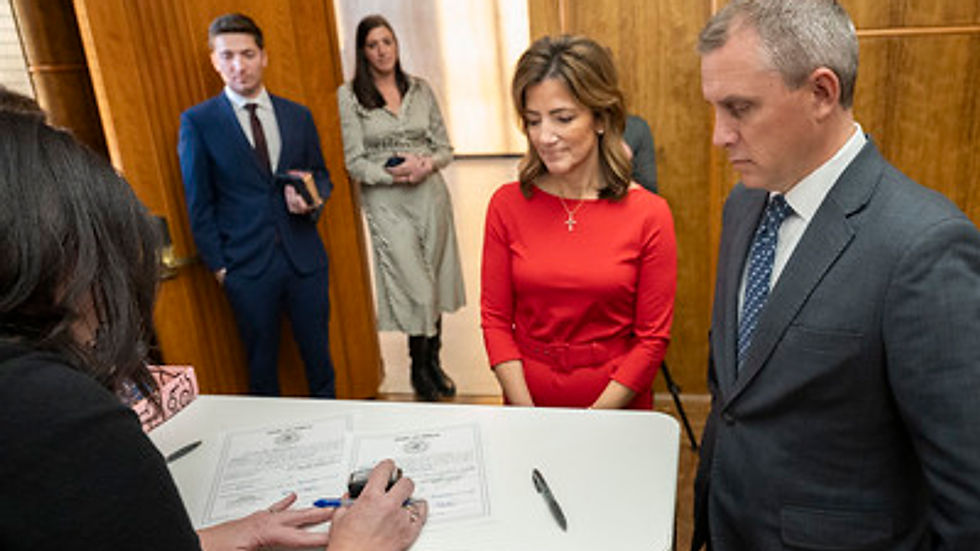
What a Notary Does vs. What a Witness Does
A notary public — like me — is a state-commissioned official. My job is to verify your identity and confirm that you signed a document willingly. My authority comes from the state. To complete a signing, I stamp the document, sign it, and create an official record of the transaction.
A witness, on the other hand, is simply someone who watches you sign. They attest that you appeared to be of sound mind, were not under duress, and signed voluntarily. Witnesses don't verify your identity like a notary does. They just observe and sign their own name confirming what they saw. Their authority comes from their presence and personal knowledge of the event.
The reason both sometimes exist is that they protect against different kinds of problems. Notarization deters identity fraud. Witnesses provide a human account of the circumstances surrounding the signing. Together, they offer legal protections for the signer and their document.
Documents That Require Notarization But Not Witnesses
Many common documents I notarize in Los Angeles County fall into this category. Real estate deeds — including grant deeds, quitclaim deeds, and trust transfer deeds — must be notarized before they can be recorded with the county. However, California law does not require independent witnesses for these documents. The same is true for most affidavits, vehicle title transfers, and many standard financial or business agreements. For these, my notarization is all that's needed.
Documents That Require Witnesses But Not Necessarily Notarization
This surprises many people: a traditional California will does not need to be notarized to be legally valid. What it does require is two adult witnesses who watch the signing at the same time. Both must sign the will themselves and cannot be named as beneficiaries in the will. California Probate Code is clear that a disinterested witness — not a notary stamp — is the primary safeguard for a will. I can notarize a will if asked. Doing so can help create a "self-proving" will that may simplify the probate process. However, notarization alone without proper witnesses does not satisfy California's requirements for a valid will.
Documents That Require Both Notarization and Witnesses
Some documents require both notarization and witnesses. This is where the details really matter.
An Advance Health Care Directive (AHCD) — the document that gives someone authority to make medical decisions on your behalf — can be executed in California using either two witnesses or notarization. However, not just any witness and any notary will do. If witnesses are used, California Health and Safety Code requires that they meet strict criteria. Neither witness can be the person's health care agent, a health care provider, an operator or employee of a care facility where the person is a patient, related to the person by blood, marriage, or adoption, or entitled to any part of the person's estate. When notarization is used instead of witnesses, it must be performed by a commissioned California notary.
A Durable Power of Attorney for financial matters under California Probate Code Section 4121 requires either notarization or the signatures of two adult witnesses. However, notarization is the standard most title companies, financial institutions, and third parties expect and accept.
When in doubt, I recommend notarization for financial POAs because it carries the most universal recognition.
The Skilled Nursing Facility Exception
As I always make a point of flagging, residents of Skilled Nursing Facilities face additional requirements under California Probate Code Section 4675 when signing an Advance Health Care Directive. In that case, one of the required witnesses must be a state-certified Patient Advocate or Ombudsman. This rule exists specifically to protect vulnerable residents from undue influence. This requirement applies regardless of whether notarization is also involved.
Why This Matters and How I Help
The consequences of getting witness and notarization requirements wrong can be serious. A will signed without proper witnesses may be contested or invalidated in probate. An AHCD without the correct execution may not be honored in a medical emergency. A financial POA that doesn't meet California standards may be rejected by a bank or court.
"What about other states?" A document executed in California that will ultimately be used, filed, or recognized in another state may be subject to that state's rules. This could require witnesses for documents California doesn't, or notarization for documents California leaves optional.
For example, some states require a will to be notarized in addition to being witnessed. Certain financial or real estate documents that need no witnesses in California may require one or two in other jurisdictions. When there's any chance a document will cross state lines, I often recommend proceeding with both notarization and witnesses as a precaution. A little extra effort upfront is far less painful than having a document rejected down the road because it didn't meet the requirements of the state where it was ultimately used.
My Expertise as a California Notary Public
My value as an experienced California Notary Public isn't just in showing up with my stamp. It's in knowing these requirements cold. I make sure that by the time a document leaves my hands, it's been executed exactly the way California law demands. I also keep in mind where that document might need to go next.
For anyone navigating a complex signing, that kind of expertise is worth its weight in gold.



Comments